


Does the NFL Have a Development Problem?
For several seasons now, a growing murmur has echoed through the corridors of the National Football League. The league has increasingly fast-tracked its young prospects, pushing them onto the field earlier than ever and handing them ever-greater responsibility. Some of those players never fully develop, hindered by deeper structural issues in their progression.
That trend has become impossible to ignore. In recent years, NFL franchises have entrusted rookies with enormous responsibility almost from day one: a young quarterback tasked with reviving a struggling franchise, a wide receiver expected to propel a contender toward a Super Bowl run, or a defensive newcomer asked to embody an entire unit’s identity. The race to accelerate development has become the norm, but it was not always this way.
Once, even a first-round draft pick might wait years before earning a starting role. Today, patience has all but vanished.
A League That No Longer Waits
The shift has been most visible at quarterback, but it now extends across every position group. Young signal-callers are burdened with franchise-altering expectations in Year 1, often within unstable environments that ultimately stunt their growth. In 2025, while coaching Cam Ward, described internally as a “generational” prospect, Brian Callahan was dismissed by the Tennessee Titans, joining four other head coaches who lost their jobs before the end of their rookie quarterback’s first season, including those overseeing Trevor Lawrence, Bryce Young, and Caleb Williams.
Even highly talented rookies are rarely prepared to excel immediately at this level. League data shows an average statistical improvement of roughly 75 percent between a quarterback’s first and second seasons. In that context, what appears to be an opportunity, playing early, can quickly become a trap.
Few cases illustrate this better than Justin Fields. Selected in the first round of the 2021 draft by the Chicago Bears, Fields arrived as the new face of the franchise. Electrifying as both a runner and passer, he surpassed 1,000 rushing yards in just his second season, a rare feat for a quarterback. Yet his development was hampered by instability: coaching changes, a porous offensive line, and persistent losing. Over three seasons in Chicago, he posted a 10–28 record as a starter.
Traded to the Pittsburgh Steelers in 2024 and later moving to the New York Jets in 2025, Fields has shown flashes of growth. But each stop has required him to adapt to incomplete rosters and evolving systems. His trajectory underscores a persistent NFL dilemma: even a gifted young quarterback can quickly be labeled a failure without a stable foundation.
Potential Undermined by Instability
Fields’ story is hardly unique. In a league that prioritizes immediate results over long-term development, rookies across all positions are thrust into outsized roles before they possess the full toolkit to succeed. The consequences can be severe: shortened careers, early injuries, and shaken confidence.
Beyond statistics, the physical toll is undeniable. The NFL is unforgiving; every mistake carries a price. Young players, often isolated in high-leverage situations, face elevated injury risk. Several promising rookies have already seen their seasons derailed by serious injuries, shrinking their developmental window and, in some cases, jeopardizing careers before they truly begin.
Meanwhile, the specter of the “bust” looms large in front offices and fan bases alike. High draft picks such as JaMarcus Russell demonstrated that elite physical tools alone are insufficient when circumstances are unfavorable. Fields’ journey reinforces that even exceptional athleticism can be limited by weak rosters, organizational instability, and suffocating expectations.
The NFL is playing a dangerous game: in chasing immediate returns from its youngest players, some teams may be sacrificing sustainable growth. And the phenomenon no longer affects quarterbacks alone. Receivers, linemen, defensive backs, no position group is immune. The risk of wasted talent is real.
The League’s Dilemma
Perhaps the most striking symbol of this developmental tension unfolded during Super Bowl LX, where the New England Patriots fell 29–13 to the Seattle Seahawks. On the sport’s grandest stage, one of the most scrutinized figures was rookie left tackle Will Campbell.
Matched against one of the league’s most aggressive defensive fronts, Campbell surrendered as many as 14 quarterback pressures, according to Next Gen Stats, the highest total allowed by an offensive lineman in a single game this season. For some fans, his performance crystallized broader frustrations. Online forums quickly filled with harsh assessments questioning whether he belonged in the starting lineup at all.
Others pointed to context. Was he playing on a knee still compromised by an MCL injury? Was he simply overwhelmed by an elite pass rush on the biggest stage of his young career? Supporters countered that judging a 22-year-old rookie under such circumstances lacked perspective.
That divide encapsulates the league’s broader tension: the hunger for instant performance colliding with the realities of human development. Public reaction, oscillating between ridicule, severity, and empathy, reveals how difficult it is to accept that a first major spotlight moment can unravel, particularly when it stems from an accelerated career timeline.
Veteran offensive lineman Morgan Moses offered a measured perspective afterward: “I told him I’d never seen a rookie play the position the way he did at left tackle. He has tremendous potential. Now he can step back, recover, get back to work, and process everything he experienced.”
Super Bowl LX delivered more than a final score. It exposed the limits of a system that sometimes places young talent under the brightest lights without a sufficient safety net. Campbell, overwhelmed by Seattle’s defensive front, paid the price, his record number of pressures allowed raising questions about readiness in such a demanding context. Veterans insist his mistakes are correctable, yet his case remains a cautionary tale about rushed promotion, whether at the start of a season or in the aftermath of injury.
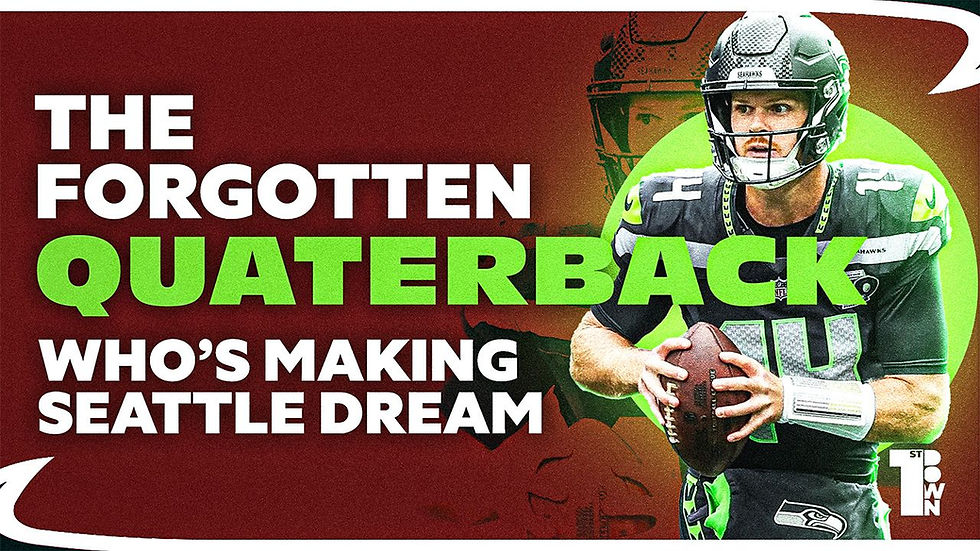
In contrast, Sam Darnold offers a counterpoint. After turbulent early years that stalled his growth, Darnold found stability with the Seahawks, a structured environment that maximized both his experience and talent. His composed, mistake-free performance in the Super Bowl victory illustrated how patient, progressive development, even if delayed, can transform a once-questioned prospect into a decisive leader.
This dual narrative, a young talent stumbling under premature expectations and a veteran flourishing in the right setting, crystallizes a central question facing the NFL: should the league rethink how it shepherds its youngest players toward maturity, rather than thrusting them immediately into the arena?


Comments